Choose the destination
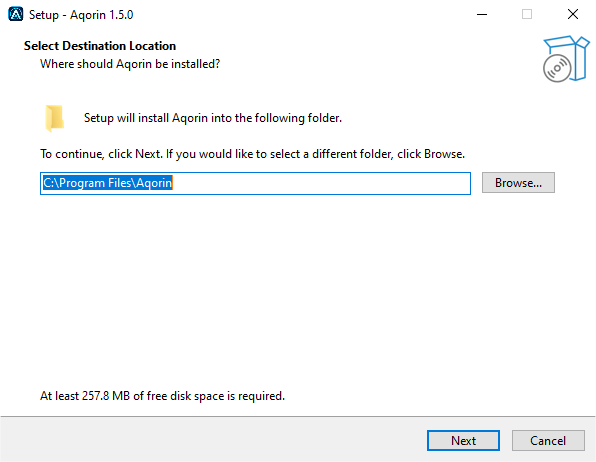
The default folder is C:\Program Files\Aqorin. Keep it unless you have a reason to install elsewhere, then select Next.

AQORIN is Windows-first and uses PowerShell as its current execution tool. Follow this guide to install the desktop app, connect your preferred AI provider, and try AI Mode, Direct PowerShell, and bounded Agent Mode.
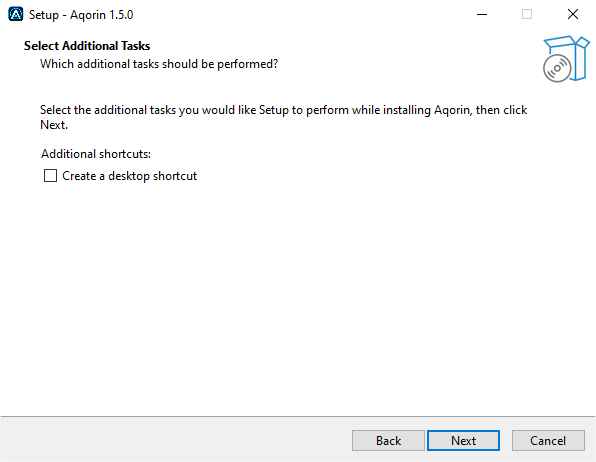
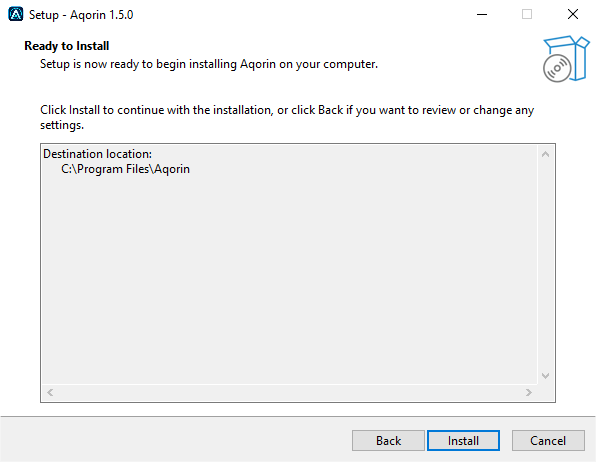
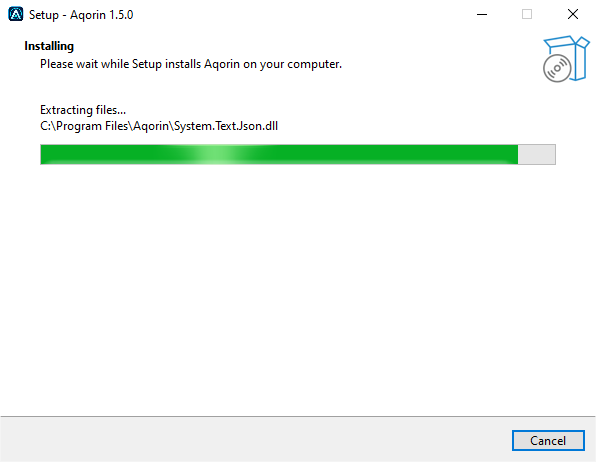
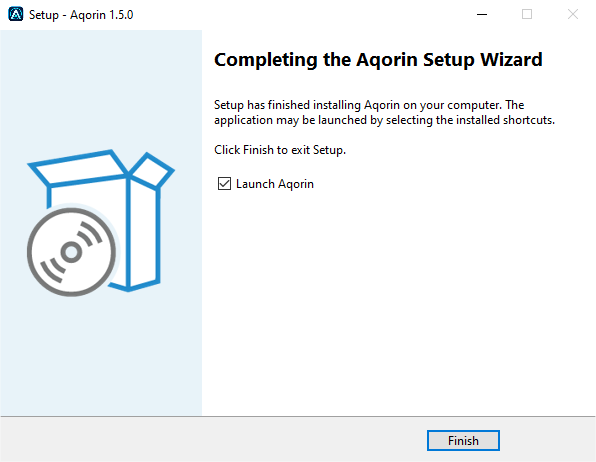
The current installer uses a standard Windows setup wizard. The screenshots below show the default installation flow and optional desktop shortcut.
The default folder is C:\Program Files\Aqorin. Keep it unless you have a reason to install elsewhere, then select Next.

Select Create a desktop shortcut if you want one. This is optional and does not affect AQORIN functionality.

Review the destination and select Install. The wizard copies AQORIN and its packaged components to your system.


Leave Launch Aqorin selected and click Finish, or start AQORIN later from your installed shortcut.

Supported providers in the current build are Mistral (the shipped default), Groq, Anthropic / Claude, Gemini / Google and OpenAI. Provider usage is billed or rate-limited by that provider; AQORIN does not bundle AI credits.
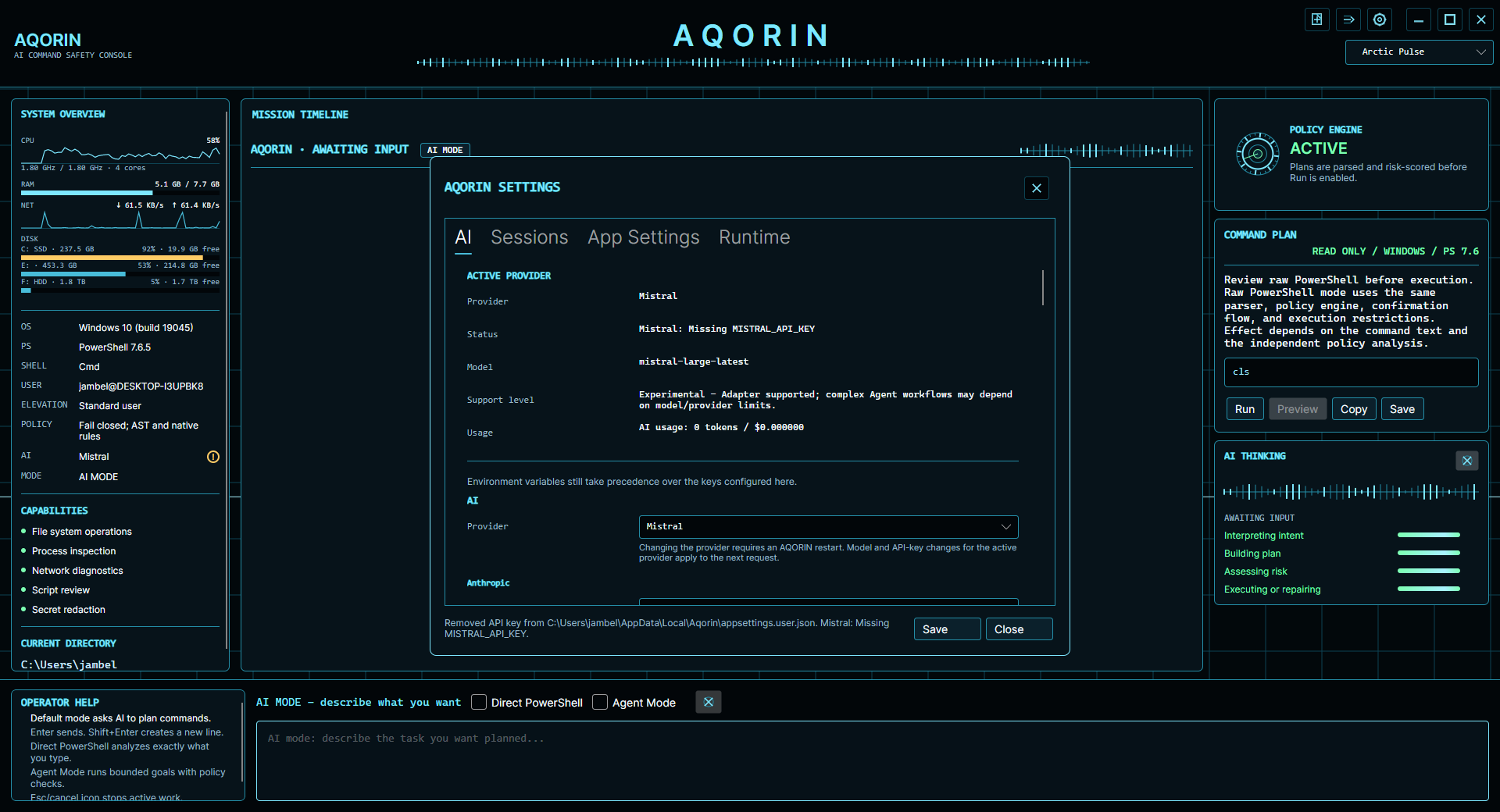
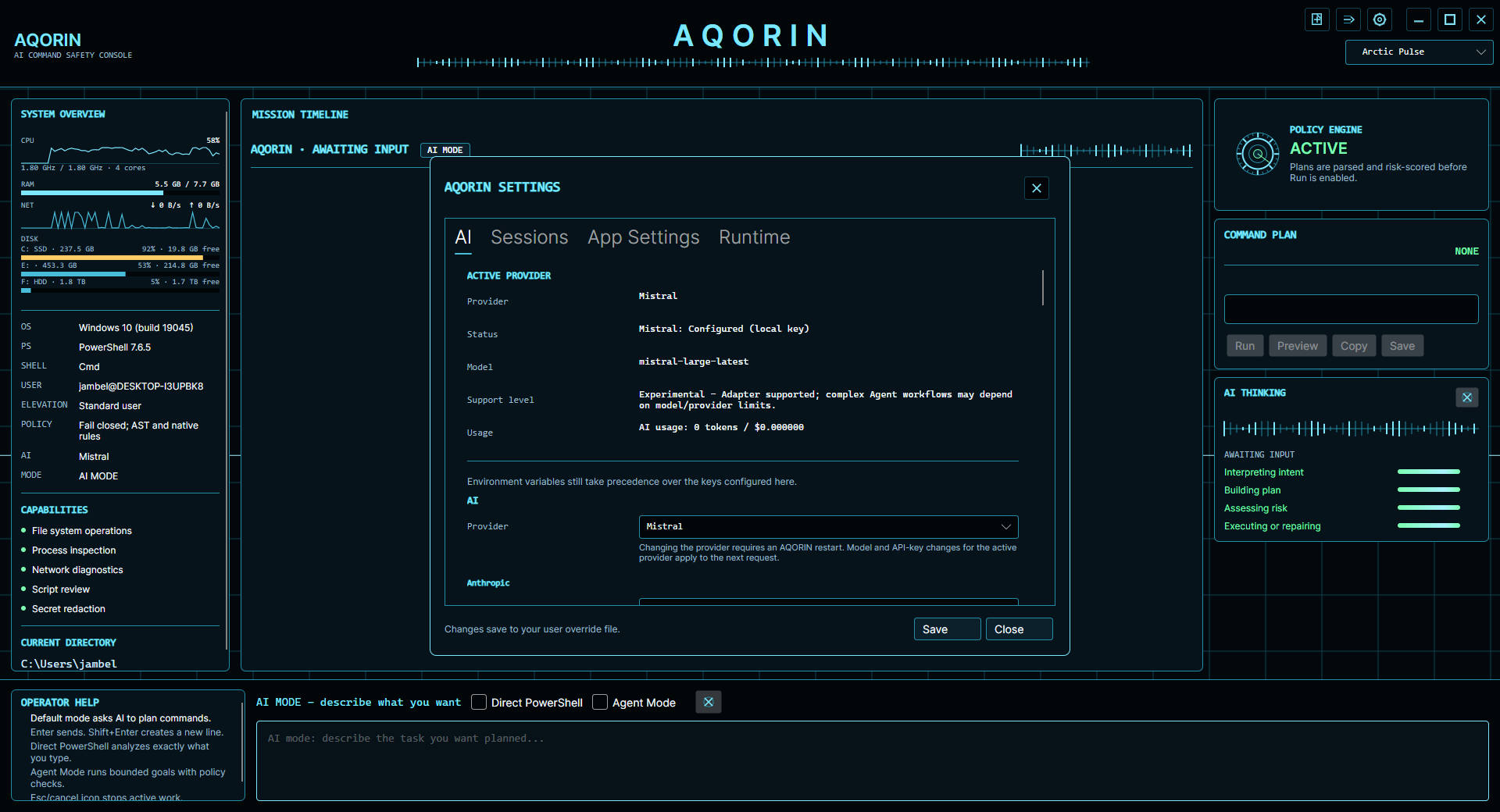
Click the gear icon in AQORIN. The AI tab shows the active provider, model, status, usage and runtime state. A missing key is shown explicitly.
Mistral: Missing MISTRAL_API_KEY
Open App Settings and choose the provider under AI → Provider. A fresh install starts on Mistral; keep it, or pick another. Save, and the next request goes to the provider you chose; no restart, for the provider, its key or its model.

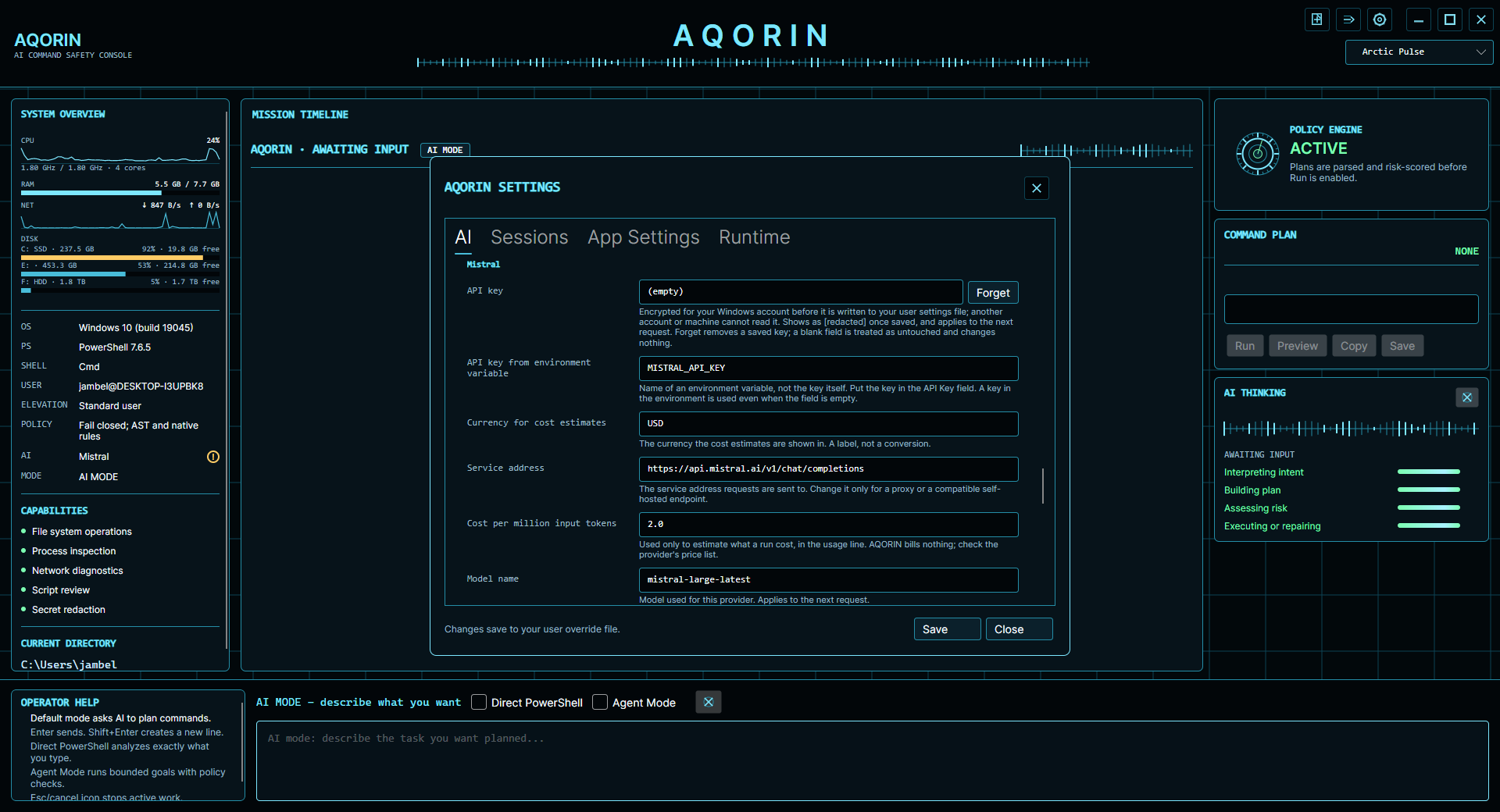
Scroll to the selected provider section and paste the actual secret into API Key. Do not paste the key into API Key Environment Variable; that field contains only the environment-variable name such as MISTRAL_API_KEY.
Select Save. Direct keys are encrypted for your Windows account before they are written to AQORIN's local user settings, and appear as [redacted] when the dialog is reopened. Forget, beside the field, removes a saved key; a blank field changes nothing.
MISTRAL_API_KEY, GROQ_API_KEY, ANTHROPIC_API_KEY, GEMINI_API_KEY, or OPENAI_API_KEY in your environment instead. Environment variables take precedence.
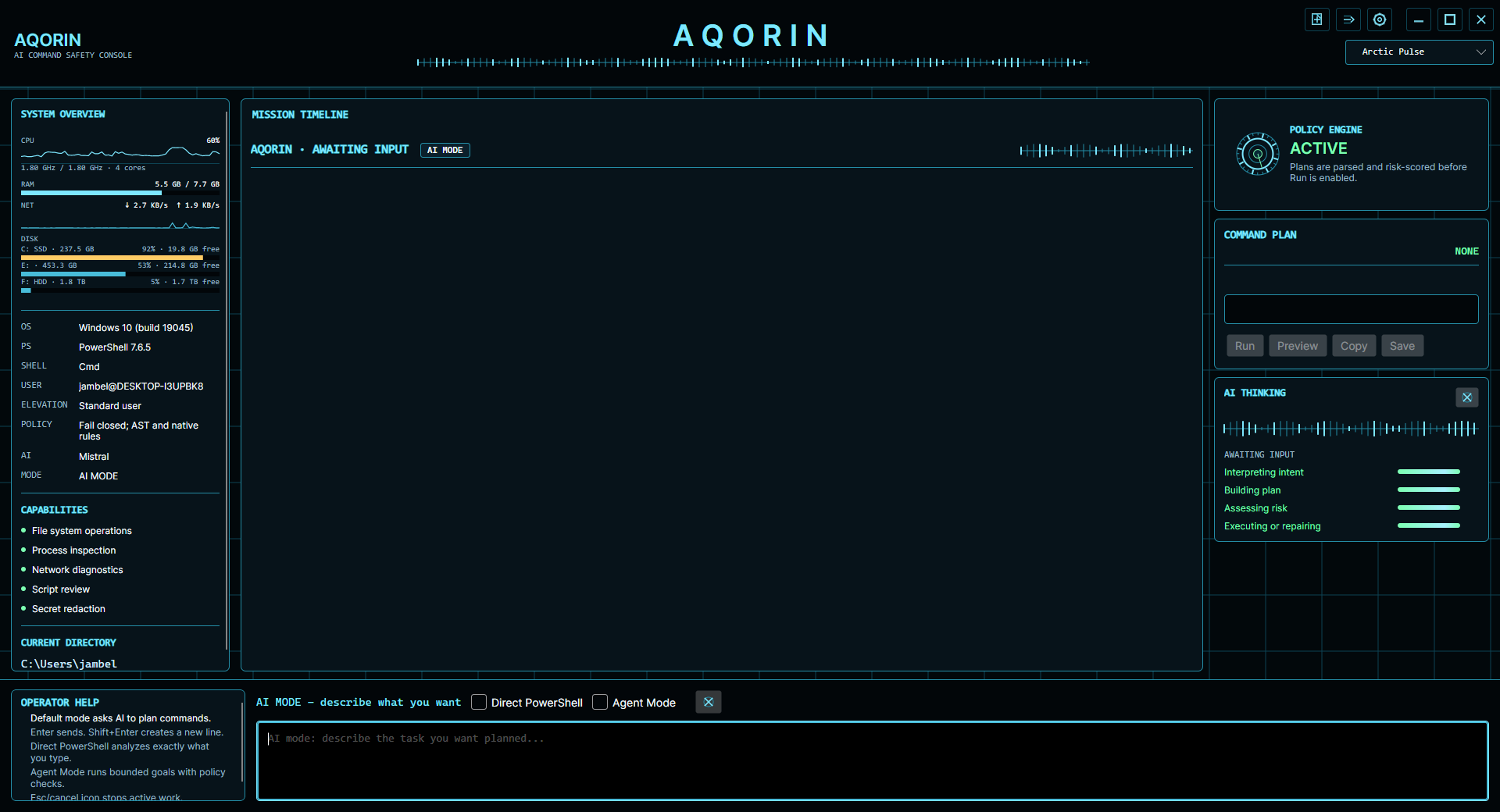
On launch, AQORIN shows the machine profile, current PowerShell/runtime information, local policy state, current directory and the selected AI provider.

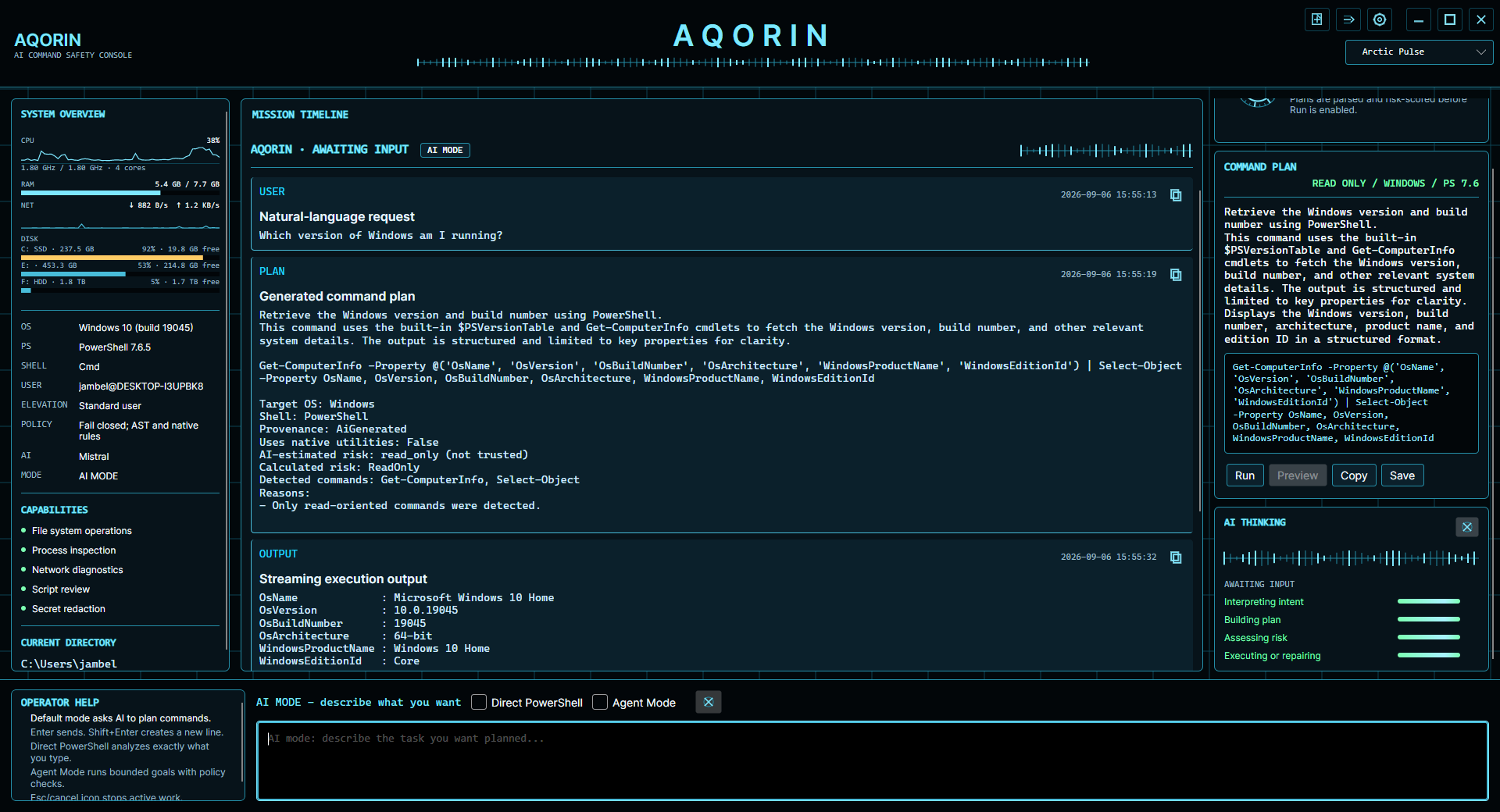
With neither Direct PowerShell nor Agent Mode selected, try a natural-language question. Remember: this build has no web/search grounding, so answer-only responses use the selected model's knowledge and may not be live.
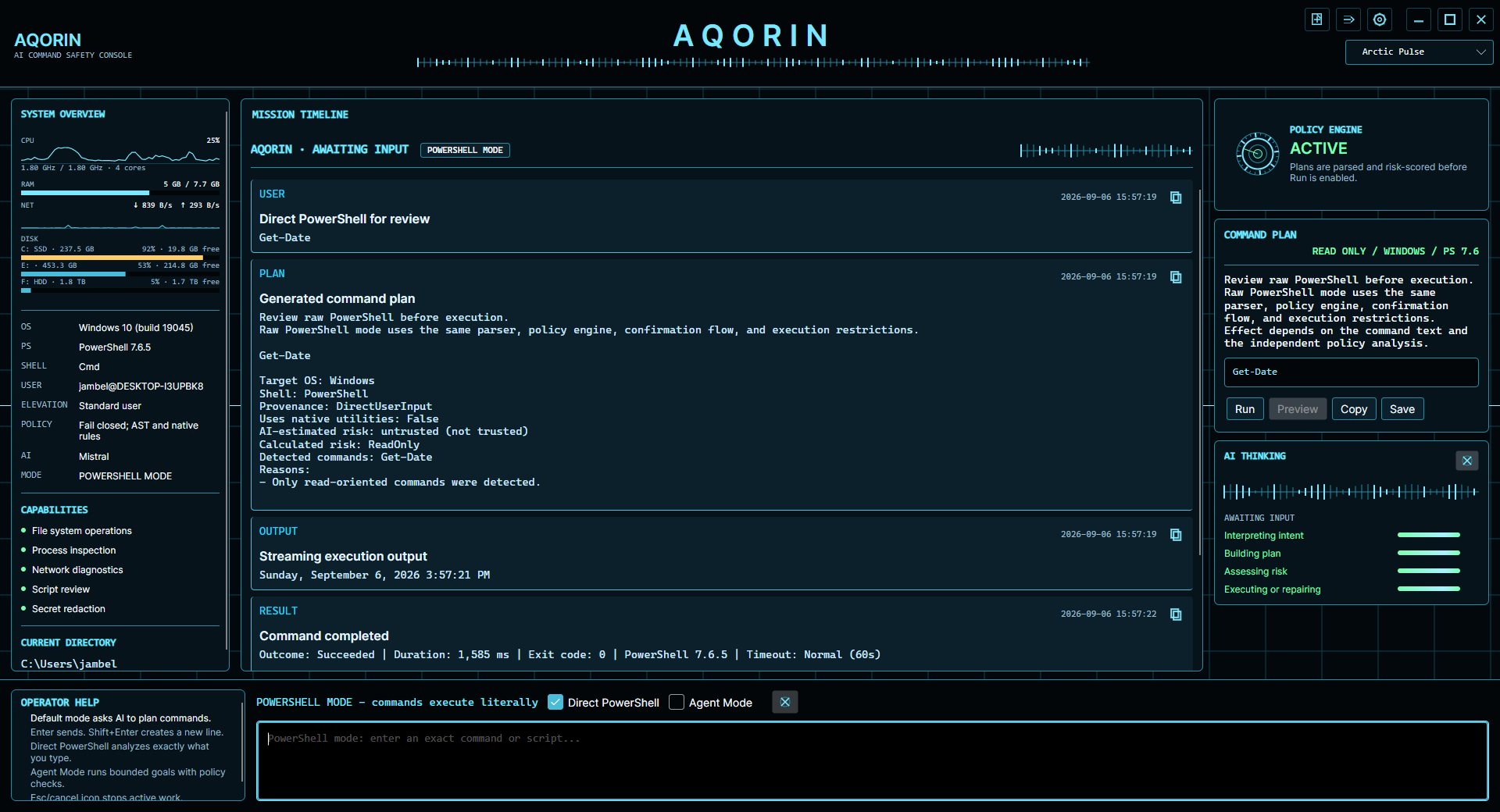
Which version of Windows am I running?Select Direct PowerShell and enter an exact command. AQORIN still builds the review card and recalculates local risk before the command can run.
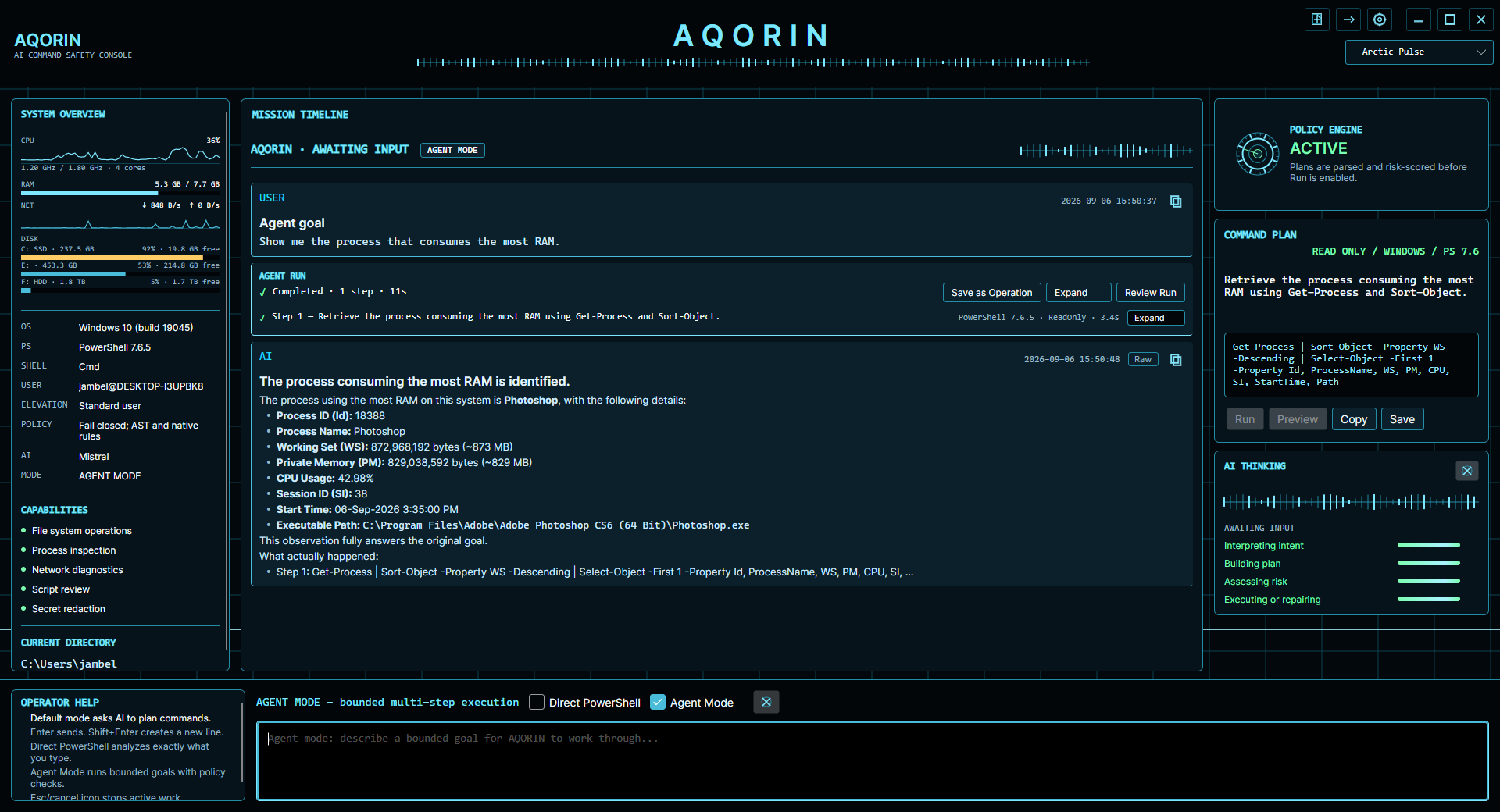
Get-DateSelect Agent Mode and describe the result you want. AQORIN may plan one or more bounded PowerShell tool actions, inspect each locally, run permitted actions, observe the results and adapt within configured limits.
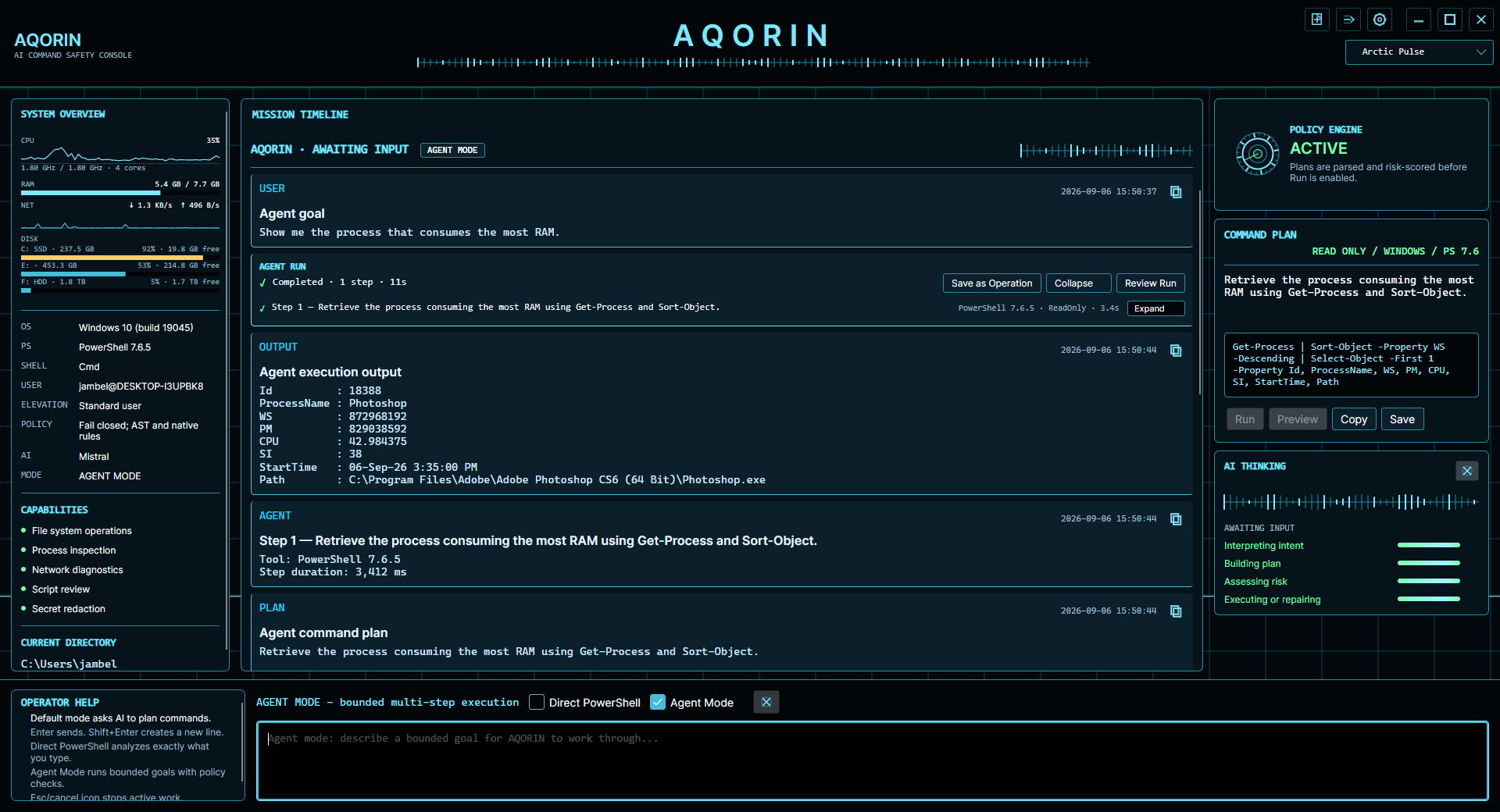
Show me the process that consumes the most RAM.Use the default AI input when you want AQORIN to answer a question or propose a plan without entering a literal PowerShell command yourself.
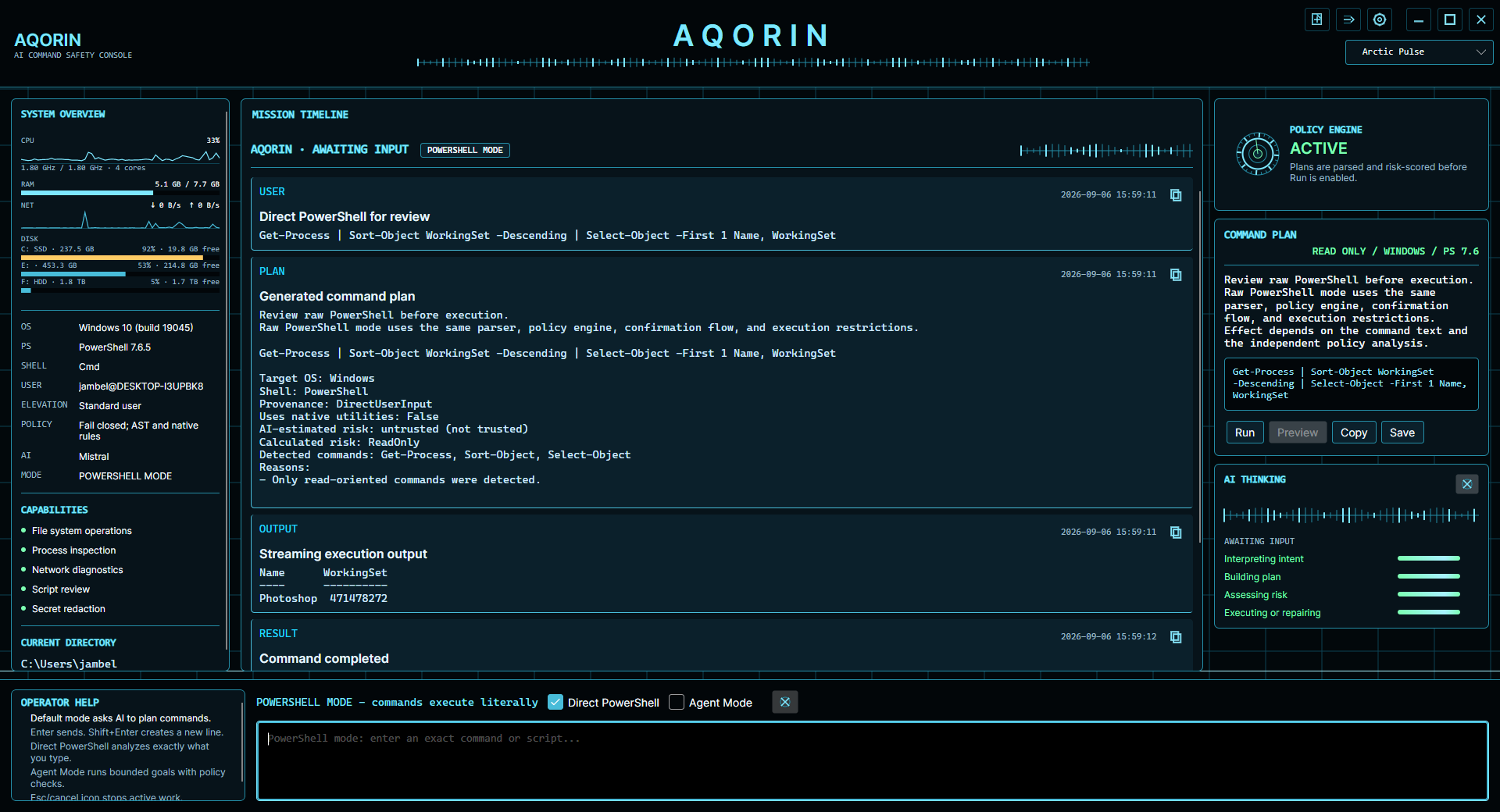
Exact PowerShell input still passes through parsing, availability checks, local risk calculation, policy and any required authorization. Read-only examples include Get-Date and process inspection.
This example sorts running processes by working set and returns the largest consumer. AQORIN identifies the command as read-only before execution.
The agent converts the goal into bounded tool actions, sends each PowerShell action through the same local inspection and policy path, then uses observations to continue or produce its answer.
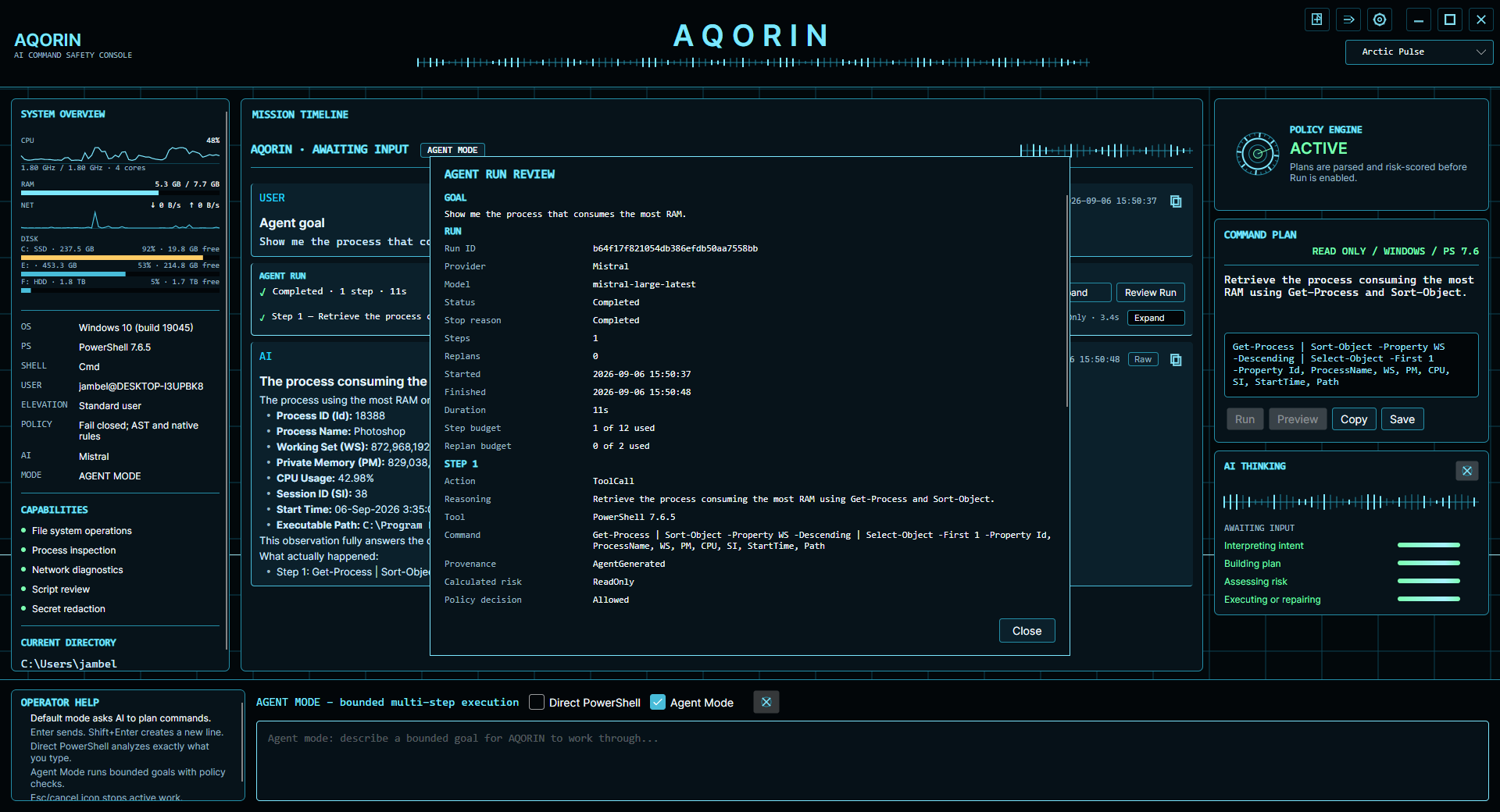
Use Review Run to inspect provider, model, run ID, duration, step budget, command provenance, calculated risk and authorization outcome.
Expanded Agent Mode exposes the goal, completed steps, tool output, generated plan and final AI answer instead of hiding the operational path behind a chat response.
Add a direct API key under Settings → App Settings → AI → Providers, or define the matching environment variable, then save.
Nothing more to do. Provider, API key and model changes apply to the next request. The System Overview shows the provider now in use, with a mark if its key is missing.
No. The current build has no web/search grounding tool. Current-fact questions can therefore be stale even when the selected AI provider answers confidently.
AQORIN runs every command in a real PowerShell process. PowerShell 7 (pwsh) is recommended and used when installed; Windows PowerShell 5.1 is supported, and the main screen marks what installing PowerShell 7 would add. Anything older is refused. Commands written for another PowerShell version or operating system are caught before they run.
AQORIN detects elevation requirements but does not silently elevate itself or bypass Windows authorization. Some operations may require an explicitly elevated workflow.
AI-generated commands can be wrong or dangerous. AQORIN adds local inspection and policy controls, but it is not a formal sandbox or complete malware detector. Review commands and risk reasons before execution.
Start with read-only tasks, learn the review flow, and enable more powerful operations only when you understand the local policy decision.